Sabtu, 07 Februari 2015

How to add bone meal to a tomato garden?

Gardeners growing tomatoes often fertilize them with assorted ingredients to achieve the best yield. It starts with amending the garden soil to make it rich in organic materials. At planting time, add bonemeal to each planting hole to boost the phosphorus level. Plentiful phosphorus enables strong and deep roots and bountiful blossoms. Bonemeal releases slowly into the soil to give tomatoes a steady supply of nutrients as they grow.

Instructions
  1. Prepare the planting area in the spring. Cultivate the soil to a depth of 6 to 8 inches with a garden spade. Add 2 to 4 inches of compost over the soil surface to improve drainage and soil composition. Rake the soil surface smooth.
  2. Dig holes for the tomato plants. Make the holes approximately 1 foot deep and 3 feet apart.
  3. Add one cup of bonemeal to the bottom of each hole. You could also add a tbsp. of Epsom salt to the hole for a magnesium boost, two eggshells for added calcium and a scoop of dry all-purpose fertilizer for general nutrients.
  4. Place a tomato plant into each hole, situating it so the soil level reaches the bottom stems. Fill soil in around the tomato plant, firming it gently with your hands.
  5. Give the tomato plants a thorough watering immediately after you finish planting them.
  6. Apply a side dressing of bonemeal when the first blossoms appear to keep the tomato plants healthy. Dig a shallow trench about 6 inches away from the plants and sprinkle a half-inch-deep and half-inch-wide line of bonemeal into the trench. Scratch the bonemeal into the soil with a hand rake and water the soil thoroughly.
Things you will need
  1. Garden spade
  2. Compost
  3. Rake
  4. Shovel
  5. Bone meal
  6. Epsom salt
  7. Eggshells (optional)
  8. Granular fertilizer (4-6-4)
  9. Cup-size scoop
  10. Tomato plants
  11. Hand rake

What is bone meal fertilizer made up of?

Bone meal is high in phosphorus and calcium, making it a preferred organic fertilizer to boost blooming in flowering plants. When applied at planting time, bone meal gives bulbs the nutrients they need to produce healthy blooms in spring. Like blood meal, bone meal is a byproduct of the slaughterhouse industry.

Raw Bones


Bone meal is made from the raw bones of animals that were slaughtered for human consumption. Meat, or muscles, and fat are removed from the bones. Then the bones are transported from the slaughterhouse to a facility that turns them into bone meal.

Processing Operation


The bones are processed at a high heat level to make grinding them easier than it would be otherwise. Most often, they are steamed or boiled in a closed container to remove traces of fat and gelatinous material. The gelatinous material is saved and used commercially to make gelatin and glue. Some bones are treated with acid before they are processed or ground.

Grinding Procedure


Processed bones are softer than fresh bones, making them easier to grind than fresh bones. The processed bones can be mechanically ground into a fine powder that releases phosphorus into soil quickly. Some ground bone meal, labeled as "raw bone meal," is made by grinding unprocessed, or uncooked, bones, but the grinding process for those bones is considerably more difficult than the grinding procedure for processed bones. Raw bone meal contains higher amounts of nitrogen than ground processed bones due to the protein in the fresh bones. The fatty residue from fresh bones delays the decomposition of raw bone meal in soil, making it a slower-acting soil amendment.

Final Product


Processed bone meal is sterile and contains no animal pathogens. It is packaged and distributed as an organic fertilizer. Bone meal's phosphorus is available to plants only when the plants' soil pH level is under 7.0, Colorado State University research indicates.

Is bone meal good for tomato plants?

Bone meal is sometimes recommended for tomatoes and other vegetable plants as an organic source of nutrients, especially phosphorus. Tomato plants thrive when grown in nutrient-rich, organic soils and need adequate phosphorus to produce quality fruit. When used properly, bone meal can help support vigorous tomato plants. But using bone meal may present some level of risk, especially if you use too much or if you use it when the soil doesn't need it.

Bone Meal Products


Bone meal is derived primarily from byproducts of the livestock and poultry we eat. Bones are usually steamed then ground into a powder or a granular product for garden use. Bone meal has a small amount of nitrogen, moderate calcium and moderate to high amounts of phosphorus when used as an organic fertilizer. These are generally released into the soil more slowly than many synthetic fertilizers. One application per season is often enough.

Soil


Before planting tomatoes or adding bone meal to your soil, conduct a thorough soil test using a kit from a garden center or soil testing service in your area. Tomatoes prefer slightly acidic soil with a pH of 6.0 to 6.8 that is rich in organic matter and well-draining. Adjust soils that are too acidic with lime and those that are alkaline with sulfur products, according to test report recommendations. If your soil is sandy or clay-dense, incorporate organic matter, like finished compost, before planting tomatoes to balance drainage concerns and add supplemental nutrition.

Phosphorus


If your soil test report reveals a phosphorus or calcium deficiency, you can add bone meal to your tomato planting area. The "P" component you might see on a bone meal fertilizer label is phosphorus. The value can range from 10 to 13 percent or more. Tomatoes need calcium to produce healthy fruit, especially to resist the common disorder, blossom-end rot. Along with the pH adjustments and organic amendments you have incorporated, judicious bone meal supplements will support healthy, productive tomatoes.

Risks


Although bone meal is an organic fertilizer, using it is not risk-free. Phosphorus can accumulate in your soil with successive or large applications of bone meal. High levels can skew the balance of beneficial soil microbes, potentially harming tomatoes more than helping them. Additionally, excess phosphorus can leach into water tables and sensitive stream and river ecosystems, presenting significant health risks to aquatic life. Use bone meal with caution and only when you're sure the soil needs it.

Sabtu, 24 Januari 2015

Can Trees Grow in the Desert?

Deserts make up about one third of the Earth's land area, an incredible amount considering that 70% of the Earth as a whole is covered by ocean. This desert area, defined as that which gets less than 10 inches of rain a year, cannot produce much of value for mankind or for wildlife.  In many of these deserts, there is sufficient rainfall for well adapted trees to grow, but that rainfall all falls over a very short period (sometimes in one monsoon rainstorm).  Most previous efforts at growing trees and other plants in the desert have focused on collecting water in large reservoirs and distributing it via canals to crops and trees.  This method is as old as civilization itself, but it is very wasteful and inefficient (as most water in open canals is subject to evaporation, and that within pipes frequently requires electricity to move).  Also, in many places (like the Sahara and increasingly in the southwest U.S.), there is not enough water to meet all demand.  So is there a way to grow trees in the desert without continuing irrigation - yes, with the Groasis Waterboxx PlantCocoon®.


The Deserts of the world are tan on this map from Climate.gov


The Groasis Waterboxx PlantCocoon (called the Waterboxx for short) was invented by Pieter Hoff, a Dutch tulip exporter who retired to find a way to help green the deserts.  After copying the best concepts nature had to offer (from the lessons of bird droppings to the Lotus Effect to capillary water), Mr. Hoff had developed the Waterboxx.  This device, which is initially filled up with 4 gallons of water, with another 10 poured into the soil where the plant is to be planted, is a self refilling water battery for trees and other plants.  The tree is planted in the central opening of the Waterboxx, and its roots grow straight down to access the soil water column released by the Waterboxx.  The Waterboxx collects dew whenever present and is completely refilled by just 4 inches of rainwater.  The whole process of the Waterboxx is explained below:


The Groasis Waterboxx has been tested in several deserts around the world.  Its first large scale test was in the great Sahara Desert in Morocco.  Below you see the initial planting of Tamarix (salt cedar) trees in a land of nothing but dry sand.  This planting took place in 2010 initially.

october 2014
Setting up a Groasis Waterboxx to plant a Tamarix Tree in 2010 - From Groasis.com

These trees thrived.  Using the Waterboxx, tree plantings in Morocco had a 88% first year survival rate, compared to 11% with the non-Waterboxx trees, which were watered weekly.  When two trees are planted per Waterboxx (as intended) the chance that one of them survives is 99%.  The Waterboxx was left in place until the trees outgrew them, and the results are seen below.


grote afbeelding
The same Tamarix trees 4 years later in 2014 - also from Groasis


Tree plantings in the desert of Ecuador were even more impressive.  Below you see over one year's growth of a Beechwood tree planted with the Waterboxx.  Because deserts tend to be in areas with more sun (due to location and less cloud cover), once the critical shortage of water is solved by the Waterboxx, the desert can truly bloom.

14 month growth of a tree with the Waterboxx - compiled from photos at Groasis.com

So yes, trees can be grown in the desert with the Waterboxx.  The Waterboxx was initially designed to stop the spread of the deserts, planting trees along desertifying lands like the Sahel region in Africa.  We formed our company Dew Harvest because we saw the potential of the Waterboxx to change the American landscape, allowing many very dry areas in Western U.S. to have trees and other plants without irrigation.  You can buy the Waterboxx in the U.S. from Dew Harvest.

If we can establish enough trees throughout the world (for whatever reason - from lumber to nut and fruit production or shade or simple love of nature), we can not only improve the value of nearly worthless desert land to ourselves and wildlife, but we can sequester huge amount of carbon dioxide.  The Waterboxx was designed for this purpose.  Please send us your Waterboxx success story to testimonials@dewharvest.com

You can see all our blog posts about planting trees with the Waterboxx here. We would love to hear your comments below - to leave one, please click on "Comments".

Sabtu, 17 Januari 2015

Nut Trees for a Mediterranean Climate

In another post, we discussed good fruit trees for those lucky enough to live in a Mediterranean climate.  Here we will discuss the best nut trees for the same climate.

The Mediterranean climate, also known as a dry summer subtropical climate, is characterized by warm summers and mild, wet winters, with temperatures rarely dipping below freezing.  Only a few portions of the world outside the Mediterranean basin have this climate, including parts of South Africa, Chile, Australia, and southern California here in the U.S.


From Wikipedia
The Mediterranean climate can be wonderful for those wishing to grow fruits and nuts due to its mild winters.  However, the lack of summer rain can make establishing trees very difficult - that was until the advent of the Groasis Waterboxx - a self refilling water battery for trees that slowly irrigates the roots of the young plant.

What nut trees grow best in a Mediterranean climate?  There are several, including many that are popular in the U.S.

Pecans
This wonder food, Carya illinoinesensis is probably best known as a pie topping, but if eating this nut alone it is remarkably healthy.  Pecans are very difficult to establish because they have a true, deep taproot that means their roots need to be constantly wet when planting - a job perfect for the Waterboxx.  It is important to get pecans suited to your area (see here for California).  The pecan is originally from the Mississippi Valley, so it does require water during the summer months.

Carya illinoinensis.jpg
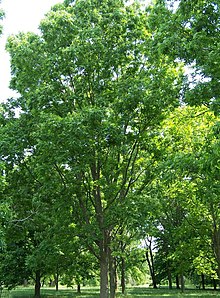
Pecan, grown for shade - From Wikipedia, By Bruce Marlin [CC BY 3.0 (http://creativecommons.org/licenses/by/3.0)], via Wikimedia Commons

Walnuts
Walnut, or Juglans species, are very interesting trees.  Renowned for the quality of their wood, their nuts are also highly desired.  Walnut roots produce a chemical called juglone which prevents growth of nearby plants so any walnut groves need to be isolated from other plants and trees.  Although walnuts are monoecious (both male and female flowers on one tree) you need more than one for proper pollination due to differences in timing between shedding of male pollen and receptivity of female flowers (in other words, they are called dichogamus).  Walnuts need well drained soil.

Pistachio
These can be somewhat difficult to bring to full production because they do need watering during the summer nut ripening period.  Also, it is very important to properly process and store the nuts because a cancer causing chemical called aflatoxin can be produced by a fungus on improperly stored shells (as it is produced in many other plants under improper conditions).  These trees are also slow growing - taking a minimum of 5 years after planting grafted trees to get any nuts.  If you are patient and in for a challenge with a great reward, pistachio may be for you.  You will need one male tree for every 9 female trees.  Male trees do not produce the nuts.  Here is a list of nurseries where you can buy pistachio trees.  Planting with the Waterboxx can give the roots more consistent water and better growth early in the tree's life, potentially decreasing time to nut production.

Ripening Pistachio Nuts - From Wikipedia, By Paolo Galli (Own work) [CC BY-SA 3.0 (http://creativecommons.org/licenses/by-sa/3.0)], via Wikimedia Commons

Almonds
Prunus dulcis, almonds are actually a stone fruit that is treated like a nut.  These trees are superbly suited to a Mediterranean climate, and in the U.S. grow best in southern California.  They bloom in February, and need consistent watering after planting, best provided by the Waterboxx. Of note, it is very important to never eat wild almonds as they contains the chemical amydalin which can be converted into hydrogen cyanide, a very deadly poison.

Chestnuts
Castanea species, these are the only nut that contain vitamin C.  These trees can be harvested in October.  Chestnuts are very drought resistant once established, and the Groasis Waterboxx is the perfect device to establish deep roots without continued watering.  These trees prefer a soil pH of 4.5-6.5.  You will need at least two chestnut trees to have production of nuts.  More detailed instructions on planting chestnuts can be found here.  Chestnuts are generally cooked in aluminum foil until one pops - then the rest are eaten.  Without cooking they can be quite bitter.

Planting nut trees with the Groasis Waterboxx
Areas with Mediterranean climate can be wonderful places to live, garden, and grow trees - if the trees can get deep roots established.  The Groasis Waterboxx solves this problem, and ends the need for irrigation of young trees, by slowly releasing stored water to the roots of the growing tree.  The water is also prevented from evaporation by the Waterboxx, meaning a column of water will grow directly beneath the tree, inducing the tap root to grow straight down to deeper capillary water.  The Waterboxx refills itself from rare rain and morning dew, funneling it into a reservoir for later use.  The Waterboxx is explained in the video below:

The Waterboxx can be reused for up to 10 years, and used for planting multiple different trees.  The Groasis Waterboxx can also be used for growing annual garden plants.  The Waterboxx can be purchased from Dew Harvest here.

Harvesting and Storage
As mentioned above, improper harvesting and storage of some nuts can lead to contamination with aflatoxin, which is potentially lethal due to liver damage and cancer causing properties.  The University of California has an excellent resource on how to harvest and store many of the nuts discussed above.

Try Out The Waterboxx
The Groasis Waterboxx is available for purchase from Dew Harvest in the United States.

You can see all our blog posts about planting trees with the Waterboxx here.

We would love to hear your comments below - to leave one, please click on "Comments".

Sabtu, 27 Desember 2014

Top Ten Tomatoes - 2014

These breeding lines are at various stages in development, but represent those that we voted as best of 2014.  Since these plants were in four different breeding nurseries, MN, NC, PA and CA – there are at least two from each to avoid biasing by growing location.   The fact they were not side-by-side, head-to-head, and were tasted at various times from mid-July to mid-August should preclude a formal ranking – but what the heck.

#1  I planted Everett's Rusty Oxheart tomato a few years ago, and it was too late for our Minnesota season - never ripened.  I was able to use it as a pollen parent in a cross, and wow!  We've got a handful of F4 lines now that are hands down the best/tastiest tomatoes in our breeding nurseries.  I’ve posted two photos that represent the range of about eight lines we are advancing. All have phenomenal flavor and a light to dark ochre skin with some pronounced green in the flesh.  The fruit have heart shaped tendencies.  Good lookers to be sure, but the flavor will make these famous.  I have never been so optimistic about a breeding line.


#2  I love the contrast between dark red flesh and the metallic green striped epidermis in this line.  This trait combo is now fixed in the F5 – we are fine tuning now for flavor, fruit shape/size and plant health.  We think this line will be outstanding.  The two photos represent the surprise/thrill in cutting open the fruit.  Someone online said it looks like a watermelon – perhaps.


#3  Backcrossing is traditionally used to introduce a “donor trait” from a non-recurrent parent into a elite (recurrent) parent.  BCx generation represents x number of backcrosses to the recurrent parent – for example (AxB) x B = BC1.  A modified backcross means that the “recurrent” parent may vary from one generation to the next; (AxB) x C = MBC1, with A being the trait donor.  Here are fruit from three excellent F4 plants from MBC2 lines with OSU Blue as the donor parent.  Flavor in these striped indigo cherry/grapes is very good to excellent - basic trait package is fixed, fine tuning should be completed by 2016.


#4  This is perhaps the best beefsteak I have ever tasted.  Deep red with gold stripes, a F6 from Earl’s Faux x BTD.  Unfortunately the only photo shows cross sections of F5 plants sliced open for tasting in the NC breeding nursery.


#5  This F5 line has wow flavor and very interesting GWR tricolor flesh. Green w/ orange stripes saladette.  It placed first in two FLF tastings at our MN farm this year.  It is still segregating some for fruit size, but flavor and tricolor flesh have stabilized.  At our home nursery (MN), this is the one I headed to consistently this summer when picking a tomato or three for dinner.


#6  We have a half dozen F6 lines from a cross between Randy Gardner’s GOB14 (LB/EB tolerant plum, similar to Plum Regal) and SunSugar.  These lines combine the flavor of SunSugar with the plant health/fruit quality of GOB14. Shape varies from grape to elongated pear - this one was a favorite.  Several of these were also at the MN nursery this year and rivaled #5 for most often eaten with/for lunch or dinner.


#7  A great line in it’s own right, this is turning out to be a phenomenal parent. This F6 line traces to (Sungold x Pink Boar), with Brix >10, and a lot of flavor complexity.  It is a poor seed producer with only moderate fruit yield - but tends to pass on most of its flavor attributes as a parent in F1 crosses.  We call it the ugly duckling – but the taste will knock your socks off.


#8  This started out as a project to combine freckles and Aft/atv fruit.  The goal was gold freckles on an indigo background - and we are getting close.  Still a work in progress, but this year at our NC/Burton Farms nursery we found this single plant in a row of 50.  A friend suggested the name “Lucy in the Sky”.  This year we’ll see if the phenotype is stable.


#9  Best tasting GWR in 2014, this F4 has a complex pedigree with contributions from SunGold, BTD and Cherokee Purple.  A striped oblong heart with very high yield, excellent fruit quality and very good plant health.  We have high hopes for this line, though it is still segregating.


#10  We love a starburst pattern on the blossom end, and have several such lines.  This is one of the most striking, and best tasting.


Selasa, 02 Desember 2014

Grow Trees in the Desert With These Five Tricks From Nature

Biomimicry is the process imitating the wisdom of nature to solve human problems, and it rightfully has received a great deal of attention lately. Nature's organisms have been struggling to adapt to and live in inhospitable environments for millenia, while modern human engineering attempting the same feat is only a few hundred years old. The most famous example of biomimicry is probably Velcro, which mimics the hooks of burrs to become adhesive to fabric and hair.  However, a more complete and just as useful example of biomimicry is the Groasis Waterboxx.

The Groasis Waterboxx is a brilliant device to grow trees and other plants in the desert without any continuing irrigation.  The Waterboxx uses multiple ideas from nature to accomplish this task - in fact, the Waterboxx is so effective that it allows up 88-99% of trees planted with it to survive in the Sahara desert.

Bird Droppings
Birds are like humans in that they can see in color (some can actually see into the ultraviolet spectrum) - likely to be able to pick out brightly colored flowers and berries from surrounding green leaves.  Plants have evolved bright colors for their fruits in order to have their seeds eaten by birds, have the outer coating of the seed digested, and then having the seed deposited far from the parent plant in a bird dropping.  Bird droppings cover the seed planted on the soil, allowing the seed to be in contact with the existing capillary channels of the soil, thus allowing capillary water to reach the seed, ensuring is survives after germination.  The droppings themselves cover the seed, preventing drying out from sun and wind.  The Waterboxx copies this ability of bird droppings to plant trees and other plants - allowing capillary channels in the soil to remain intact while preventing soil moisture from evaporating into the air - similar to how a stepping stone will always have a wet underside as that soil moisture can't evaporate either.  You can see an overview of the Waterboxx mechanism, including the bird dropping inspiration, in the video below.


Skin Dew Drinking Lizards
Lizards in different parts of the world have developed an amazing ability to literally drink dew off of their skin.  The Australian Thorny Devil and the Texan Horned Lizards both collect small amounts of rain water and much more frequent dew on their skin, which is then channeled into crevices between their "horns" or skin spikes.   This water is then conveyed over to the lizards' mouth to be drank, sustaining the lizards in very harsh and dry environments.  Because there is dew most days even in the desert, the lizards are able to survive.  Similarly, the Groasis Waterboxx collects dew and rain water along its lid, and is channeled into a 4 gallon reservoir where the water is protected from evaporation.  This water is then slowly released into the soil beneath to nourish a growing plant's roots.  The lid is even corrugated, mimicking the horns of the toad, which increases surface area on which water can collect.

Australian Thorny Devil - From Wikipedia, By Bäras (Own work) [GFDL (http://www.gnu.org/copyleft/fdl.html) or CC-BY-SA-3.0 (http://creativecommons.org/licenses/by-sa/3.0/)], via Wikimedia Commons


The Lotus Effect
Lotus leaves have an incredible ability to repel water, called superhydrophobicity by scientists and those fond of large words.  Lotus leaves have developed this ability in order to slick off dirt, bacteria and fungus which may damage the leaves of the plant.  This ability, called the Lotus Effect, is due to microscopic pyramids on the surface of the leaves which prevent small water droplets from attaching tightly to the surface with hydrogen bonds. The lid of the Groasis Waterboxx also has tiny pyramids which allows water to slide off the lid and down channels into the reservoir below for later use by the plant.
Graphic by William Thielicke showing pyramidal structure of the surface of the Lotus leaf.  This surface guarantees that water won't stick to the surface of the lotus leaf, or the Groasis Waterboxx lid that has similar microscopic pyramids on its surface.  
The Lake (Water) Effect
Water has incredible power to resist changes in temperature, referred to scientifically as high specific heat capacity.  This is very important in helping our planet (the surface of which is two thirds water) resist the massive changes in temperature of other planets like Mercury and the moon.  On a smaller scale, vessels of water can have a warm surface while still having a cool lower level of water.  This is familiar to almost anyone who has went swimming in a calm lake in the summer - the top most level of the water is warm, only to get much cooler farther down near a swimmer's feet.  This property of water can help a great deal in insulating plants against rapid changes in air temperature. Small plants still near the ground and the roots of larger plants are insulated from the heat of the sun in desert climates by the water residing in the Groasis Waterboxx.  In the photos below, you can see the how cool the Waterboxx keeps the soil below.

homepage-banner-verdampingsremmers-2014-ENG2
Yellow is hot, blue is cooler - the Waterboxx keeps the soil and roots of the plant cool even on hot days - from Groasis.com


Tree Trunk Effect
Trees are able to get water to their upper most leaves, even if several hundred feet high.  How do they do this - the don't have an electric pump at their base and running water.  They use capillary action, or the ability of water to pull itself up the sides of narrow tubes.  The Groasis Waterboxx takes advantage of this property in two ways.  First the Waterboxx slowly releases water from the reservoir to the soil beneath via a braided wick, similar to how torches slowly move oil for burning.  This allows a consistent supply of 10 teaspoons (50 mL) of water to be distributed to the roots every day.  Secondly, the Waterboxx planted tree takes advantage of capillary action to pull capillary water up from deep in the soil, preventing the death of the plant during times of drought.  You can see capillary action below in water rising up a paper towel.


The Groasis Waterboxx is a wonder of biomimicry - using many insights garnered from nature to increase nature - to plant trees and other plants on dry, fallow ground.  You can buy the Groasis Waterboxx from Dew Harvest  in the United States, with discounts on large orders.

You can see all our blog posts about planting trees with the Waterboxx here. We would love to hear your comments below - to leave one, please click on "Comments".